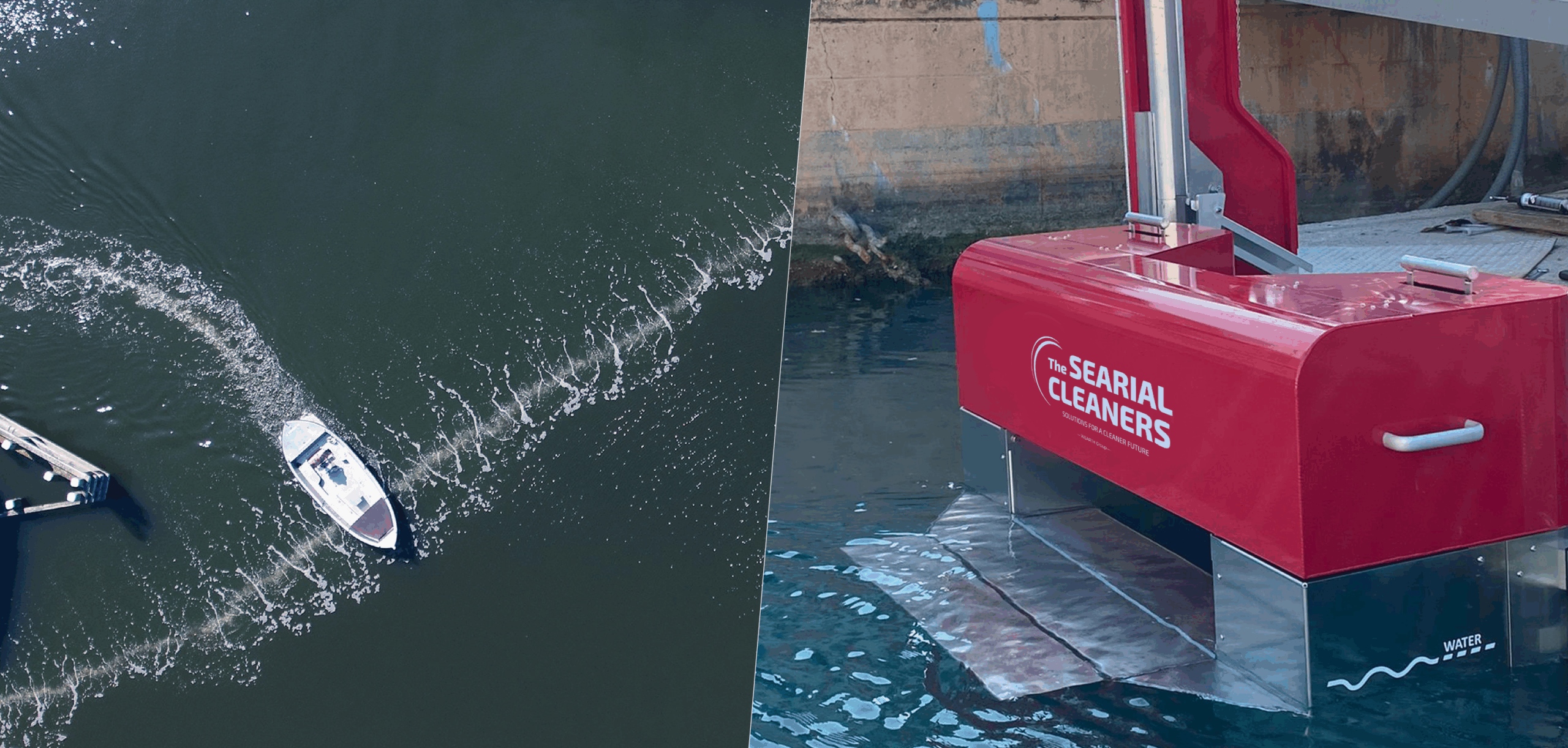


What solutions exist to stop floating waste from accumulating and stagnating?
There are plenty of sites and watercourses where we see floating marine waste silently come and go, following often identical currents that lead to the same place in the marina, lake, or river. It’s sad and worryingly predictable.
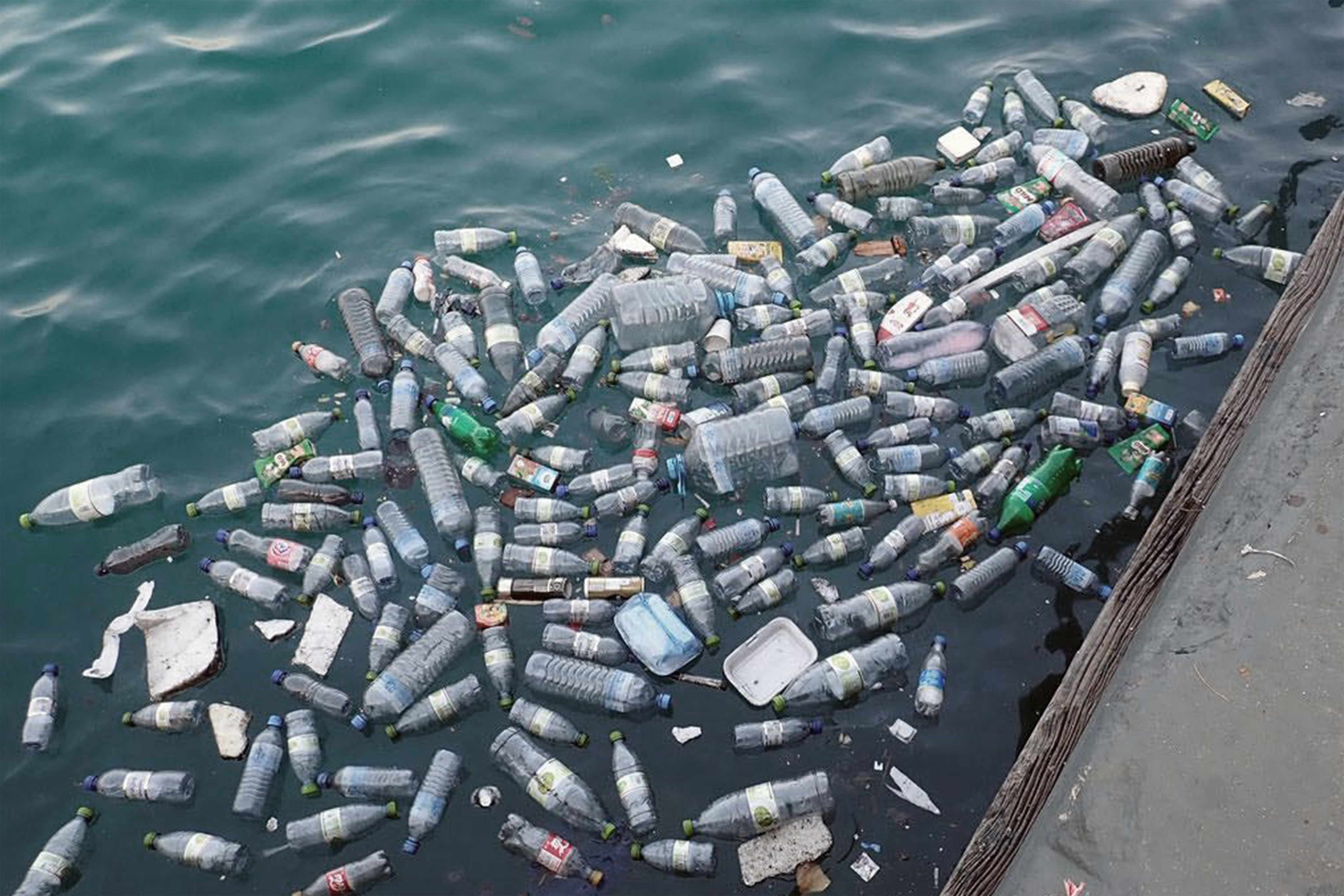
Any manager of a nautical or river site will have no trouble showing you where waste accumulates, stagnating on the surface of the water before slowly sinking to the bottom or settling on the banks.
What solutions are out there?
Is it possible to collect waste and stop it clustering together or disappearing to the bottom of the harbor or among rocks and vegetation without having to deploy costly resources—especially given that collection by hand is painstaking and expensive in terms of time and people power?
One solution is to install a fixed waste collector.
Identify the location of the current outlet and place the collector there. Its pump system generates a slight suction, attracting all unwanted floating objects and trapping them in the collector.
A technical innovation that brings transformation
A fixed waste collector such as Collec’Thor is installed at the water’s edge and/or on floating docks, offering a large storage capacity as well as being quick and easy to use. It can hold up to 100 kg (320 liters) of solid floating waste (plastic bottles, cigarette filters, packaging) as well as liquid waste (hydrocarbons). Boasting a wide scope of action, it can attract microplastics from as little as 4 mm in size. Collec’Thor doesn’t use a waste bag, and offers easy waist-level emptying and cleaning.
If the current is (too) weak, you can combine the fixed collector with a bubble curtain, our Invisibubble technology, which creates enough movement to direct the waste flow to a collection point.
Having two systems working together boosts their efficiency and reduces the cleanup cost in terms of human resources.
It’s an attractive investment when you consider what it could mean for an operating budget, particularly on larger sites.